

Is Higher Always Better? Rethinking Ceiling Height at Home
When you walk into a room, your eyes might land on the furniture or the view, but your subconscious is instantly reacting to the space above your head. In the design world, we call the ceiling the "fifth wall," and it’s often the deciding factor in a major renovation. We’ve seen clients stand in an older home and realize that the ceiling height is the one thing they can’t change. It becomes the ultimate "hot button" topic: do we work with what’s here, or is it time to tear it down and start fresh?
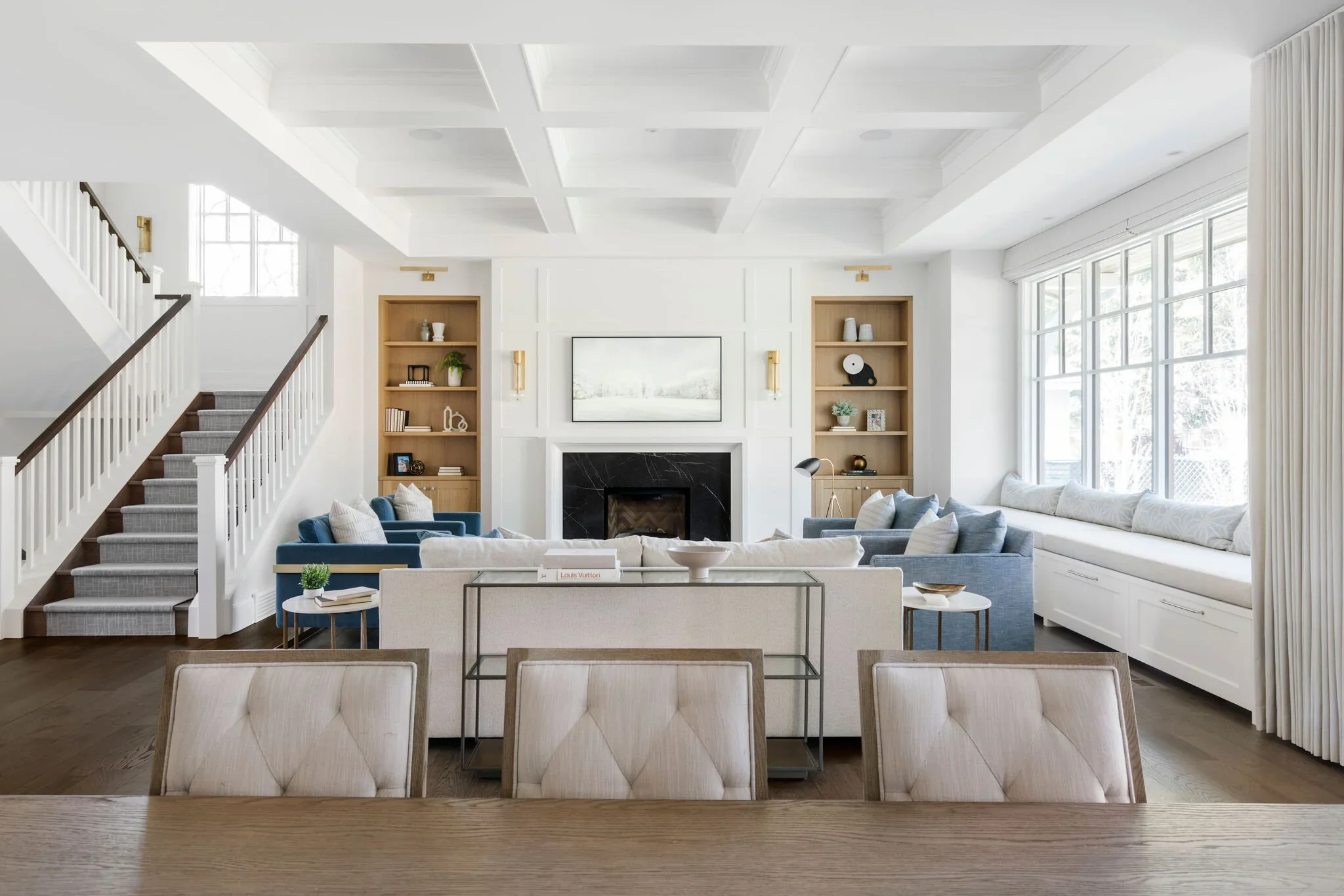
Drama vs. coziness
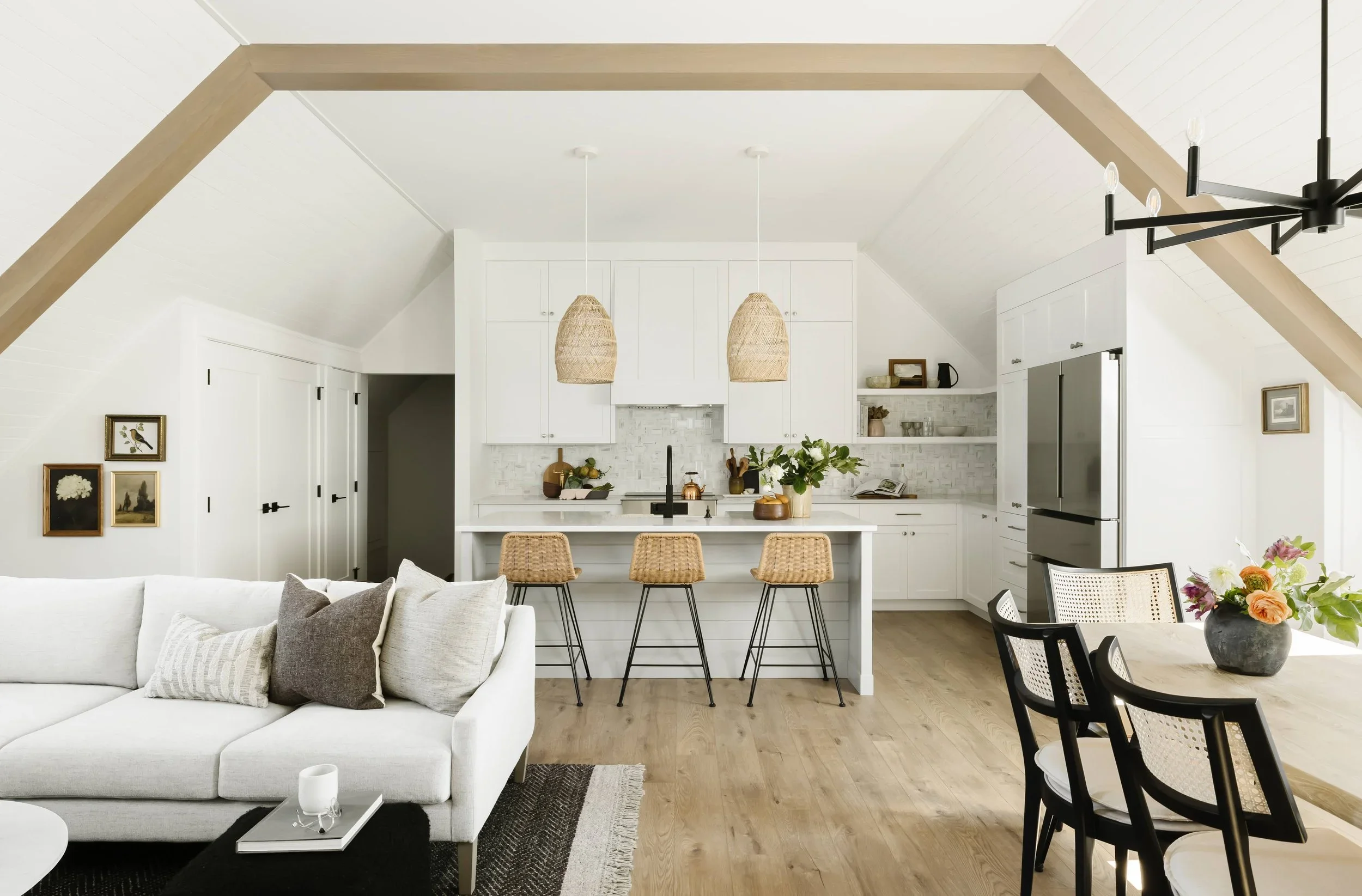
For decades, the trend was "the higher, the better." Everyone wanted those soaring, 10-foot vaults of grandeur. But lately, we’re seeing a beautiful return to the 8-foot ceiling. There’s a certain "cottage cozy" charm to a lower height that creates a warm, cocoon-like feeling. It really comes down to how you want to live. If you’re dreaming of a formal foyer that feels like a statement, go tall. If you want a space that feels like a hug, embrace the shorter height.
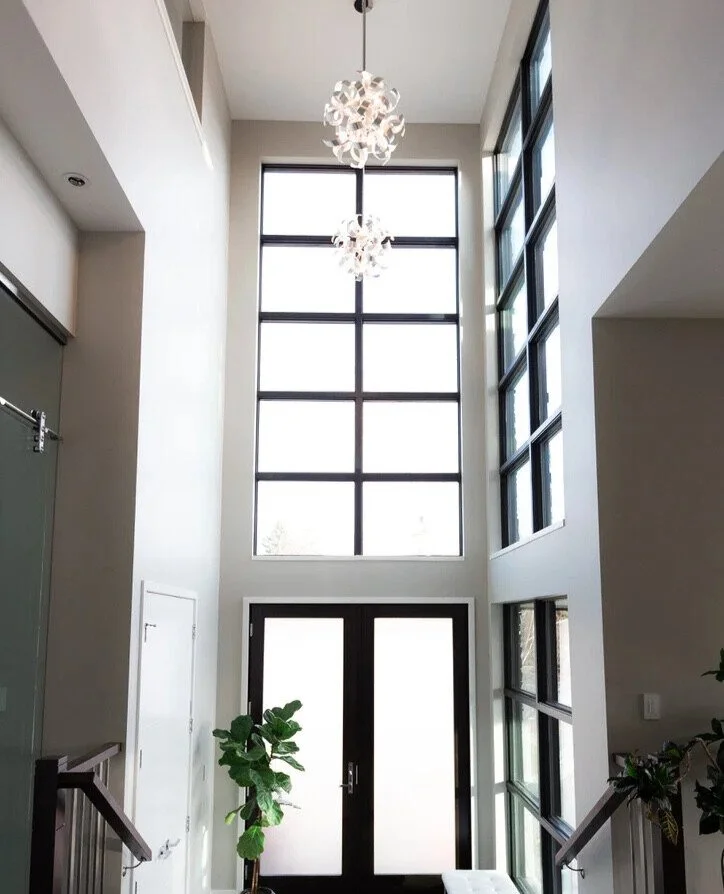
The hidden costs of height
While high ceilings offer an airy feel, they come with a snowball effect of technical considerations that we help our clients navigate. A taller ceiling usually means you’ll need:
Taller Windows and Doors — To keep the proportions from looking off.
Increased Cabinetry — Short cabinets in a tall room can cut the space off awkwardly.
Acoustic Management — High, open spaces tend to echo like a shopping mall. We often suggest adding beams or floor-to-ceiling drapery to help absorb sound and prevent noise from traveling between floors.
Energy Consumption — You’ll spend more effort and money heating and cooling that extra volume of air.
If you do decide to go tall, my best tip is to use that height for artistic elements. A high ceiling gives you the room to breathe required for deep coffered ceilings, structural beams, or even copper inserts. These features drop the visual height just enough to make a large room feel intentional and grounded rather than empty.
Mastering the Finish
If you have a standard flat ceiling, it’s tempting to reach for the "stark white" paint. What I recommend to all my clients is to use a 25% depth of the wall colour to create a cohesive, intentional look that doesn't feel harsh or "blue-white."
Always use a matte finish on the ceiling. Unless you’ve spent a fortune on perfect drywall prep for a high-gloss look, any level of shine will highlight every bump and seam. A matte finish hides those imperfections, keeping the focus on the design rather than the drywall mud.
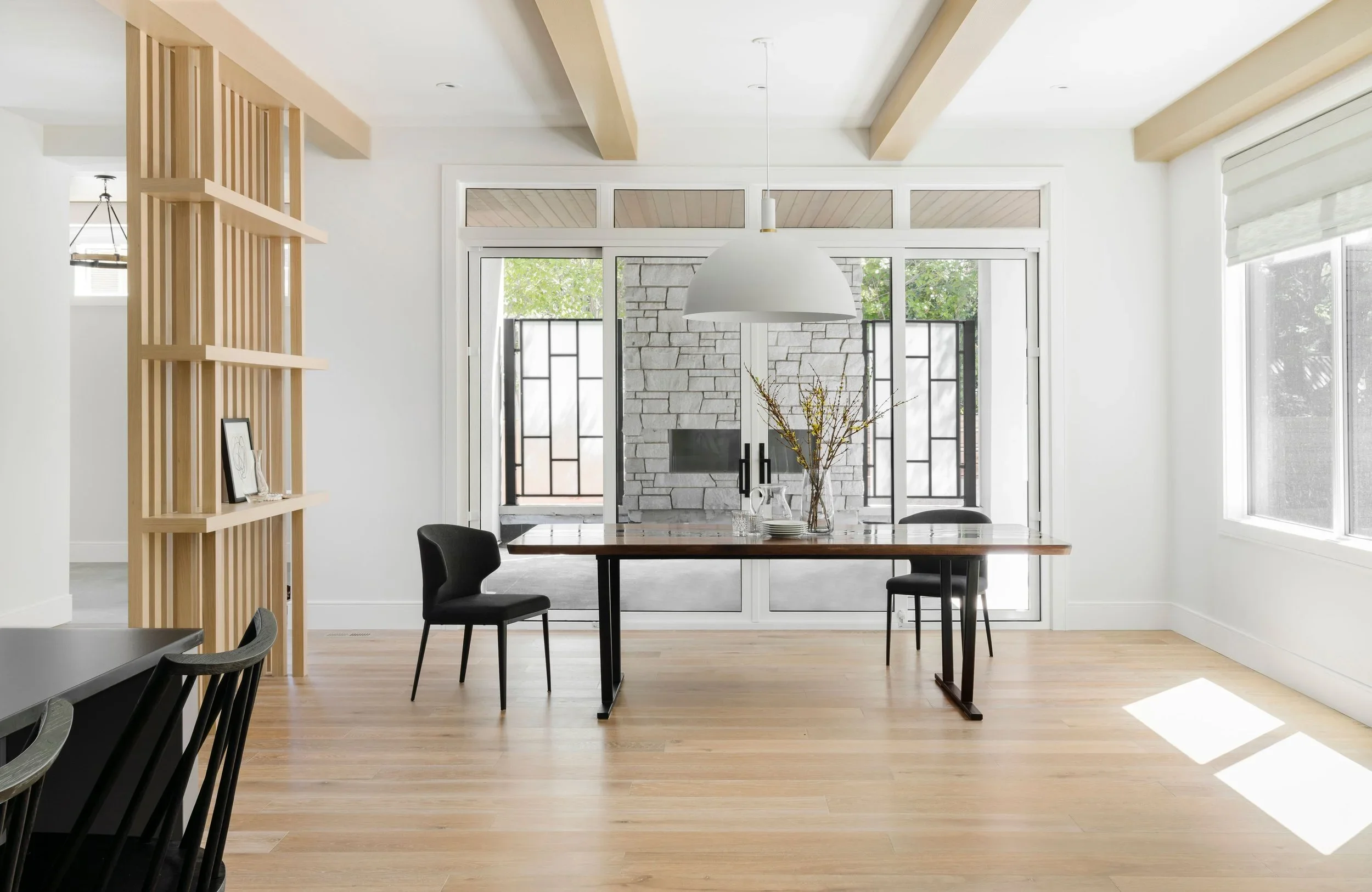
Adding Artistry to Any Height
You don't need a 12-foot vault to make a ceiling interesting. For lower heights, consider low-profile beams with just a 4-inch drop or picture-frame millwork that leans into an old-world European vibe. If you have the height to play with, coffered ceilings add a sense of formal elegance, while wood cladding or tongue-and-groove boards can lean coastal or rustic.
Ready to Elevate Your Home?
Once you start noticing ceilings, you can’t unsee their impact. Sometimes it’s the charm of an 8-foot ceiling that feels right. Other times, it’s the pull of something taller and more dramatic. Either way, the best results come from designing the fifth wall with the same intention as the rest of the space.
If you’re deciding what to keep, what to change, or how to make your ceilings feel more intentional, connect with us. We’ll help you choose a direction that fits your home and your lifestyle.