

Designing a Home Office You'll Actually Love Working In
Be honest. How many hours did you spend in your home office last week? If you're like most of our clients, the answer keeps climbing. Remote and hybrid work have turned what used to be a spare room with a desk into one of the most-used spaces in the house. And yet, it's often the room that gets the least design attention.
So what would it take to create an office you actually love working in? One that still serves you ten years from now? Grab a drink and let's walk through it, the same way I would in a design consultation.
First, a few questions about you
What do you actually do at that desk all day? Are you buried in paperwork, or is your entire job on a screen? Do you handle sensitive files that need to be locked away when the workday ends? And is this office yours alone, or will your partner and kids be angling for a seat too?
If you've never asked yourself these questions, you're not alone. Most people jump straight to picking a desk. But in our studio, this interview is where every office begins, because your answers shape every decision that follows. A financial advisor with confidential client files needs a very different room than a consultant who lives on video calls. Get clear on how the space will really be used, and the design almost draws itself.
Where will your desk go?
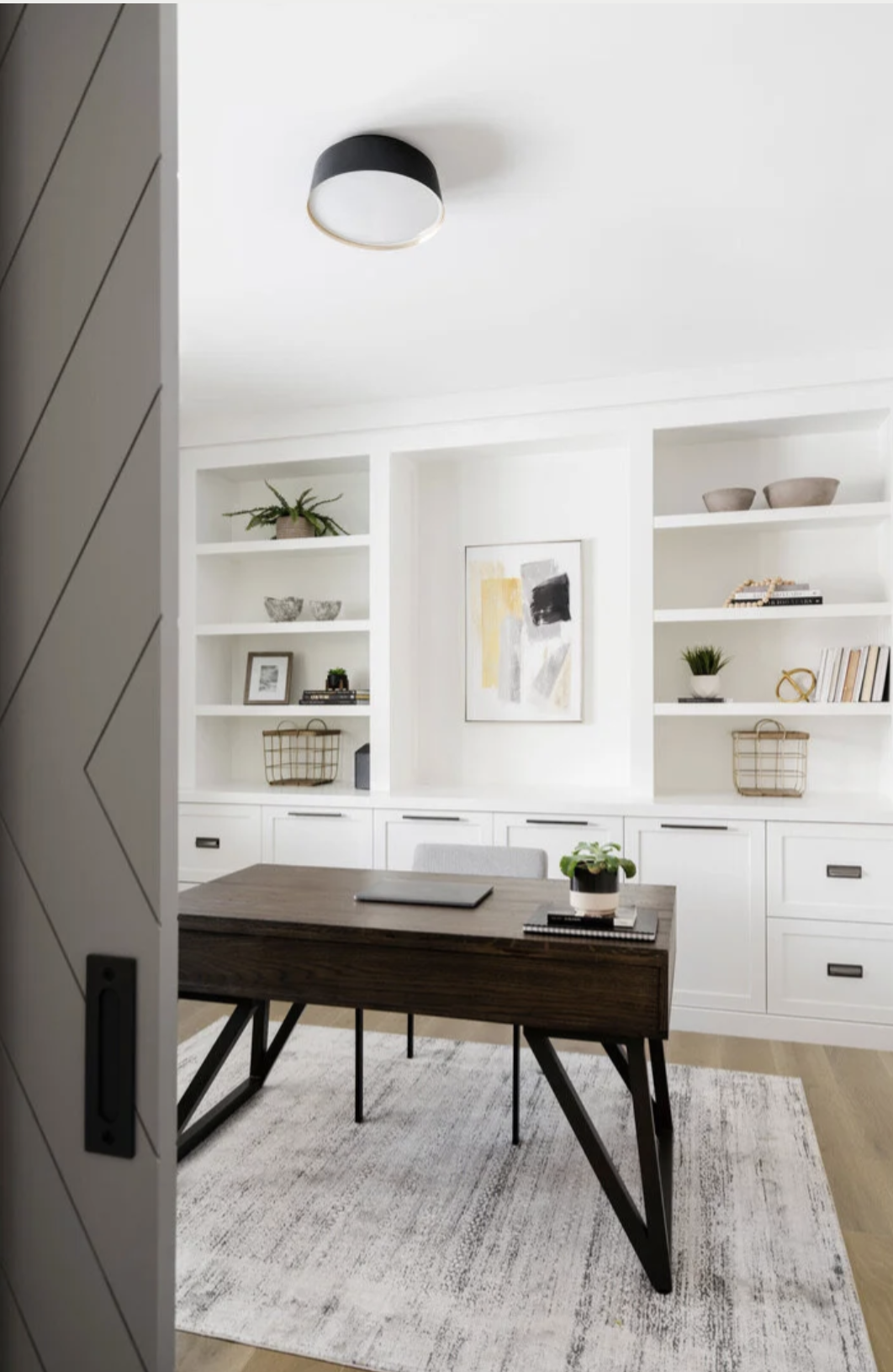
Picture your dream office for a moment. Is the desk floating in the centre of the room? Facing the window? Now here's the question almost everyone forgets: where is the power coming from?
Most technology is wireless these days, which gives you wonderful freedom. But if you want that desk in the middle of the room, you'll need a floor plug. It's a small detail, it's inexpensive to add during construction, and it's skipped constantly. Nobody dreams of a beautiful floating desk with an extension cord snaking across the rug to reach the wall.
While you're at it, think about sightlines. Do you want people to see your screen when they walk in? Would you rather face the window or the door? Are you a two monitor person, or do you wander the house with a laptop? None of these have a wrong answer. They just need to be answered before construction begins, not after.
What distracts you?
Really, what pulls your attention away? Because that answer decides half your design.
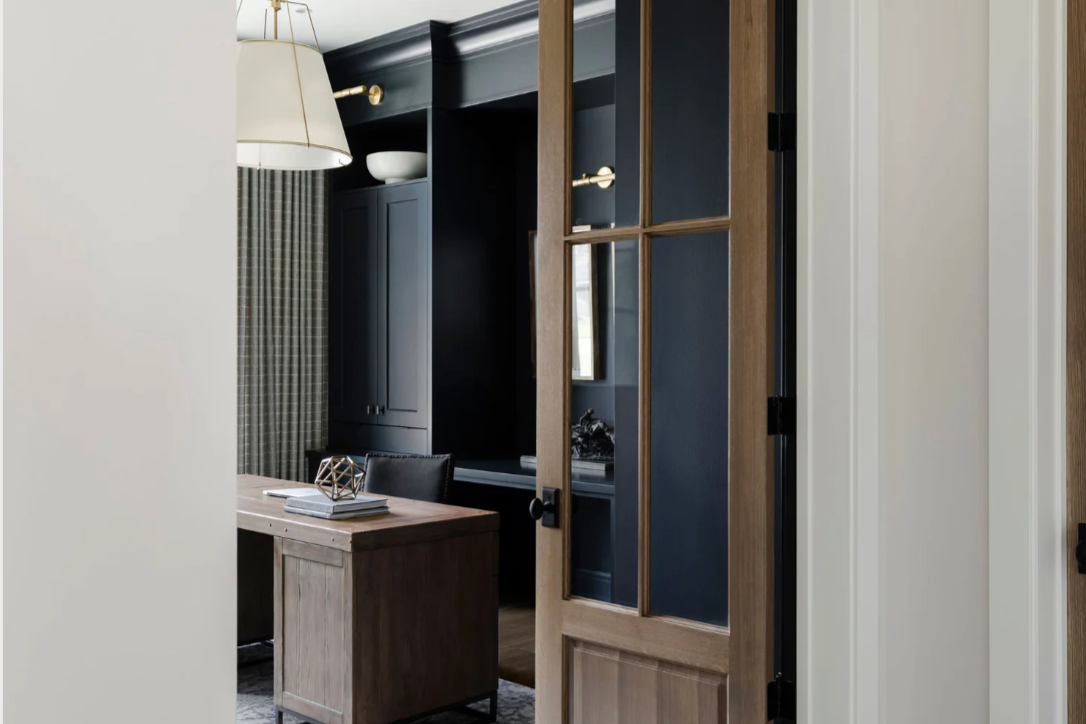
If it's noise, a door will be your best investment, especially if your office shares a floor with family life. Then comes the fun part: glass or solid? Glass lets you keep an eye on the household while you work. Solid lets you forget the household exists until five o'clock. I’ve designed both for very happy clients.
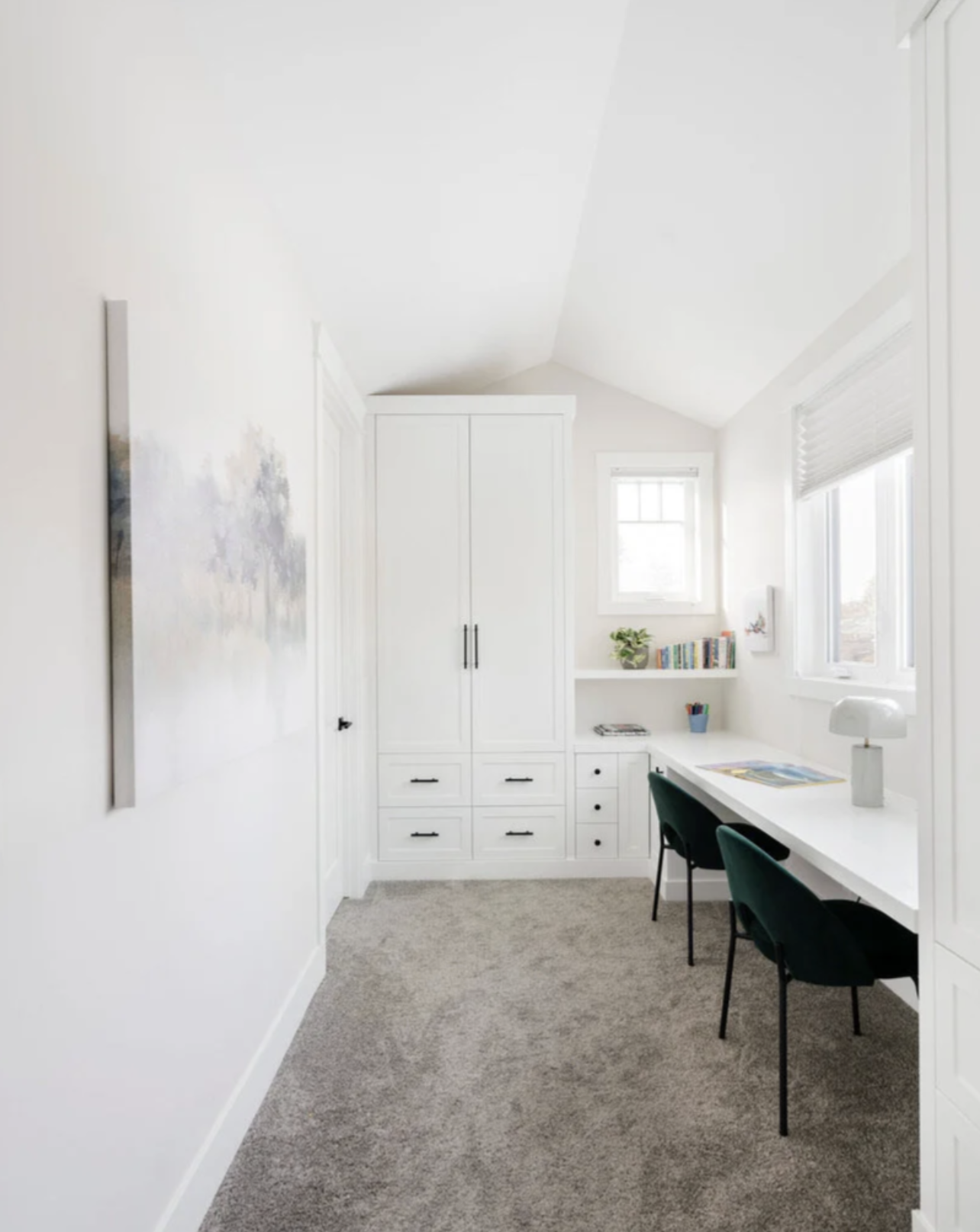
If clutter is your weakness, zoning is your friend. Does your office moonlight as something else, maybe a makeup station or a homework spot? Closed cabinetry can compartmentalize each function so the room never pulls you in two directions at once. Work lives on one side, everything else disappears behind a door.
And if you're wondering where I land on this: my desk faces the window. Trees, it turns out, are far kinder to your imagination than a blank wall.
Where will all your stuff live?
Quick inventory. Printer, router, filing, chargers, that drawer of cables you're afraid to throw out. Where is it all going?
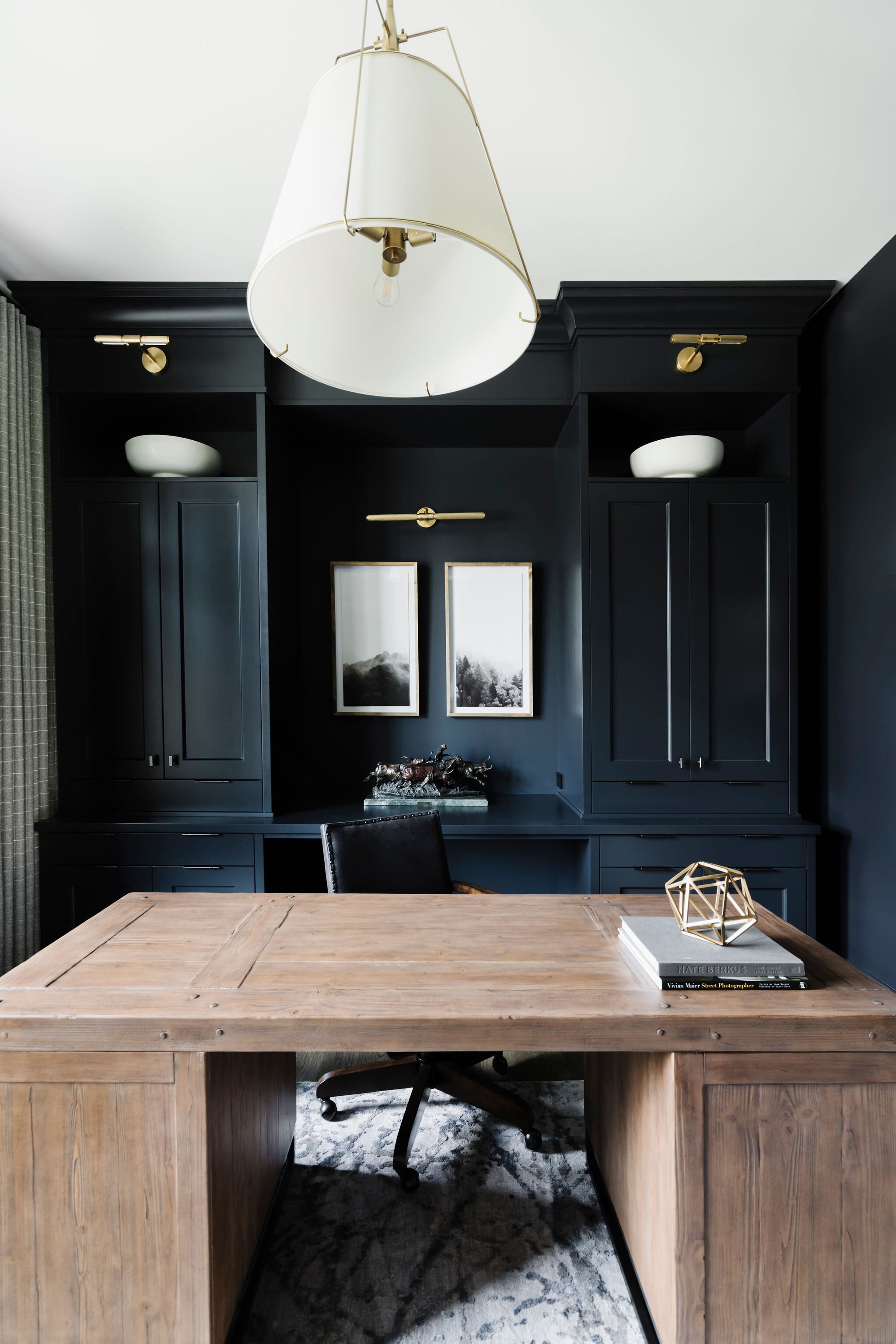
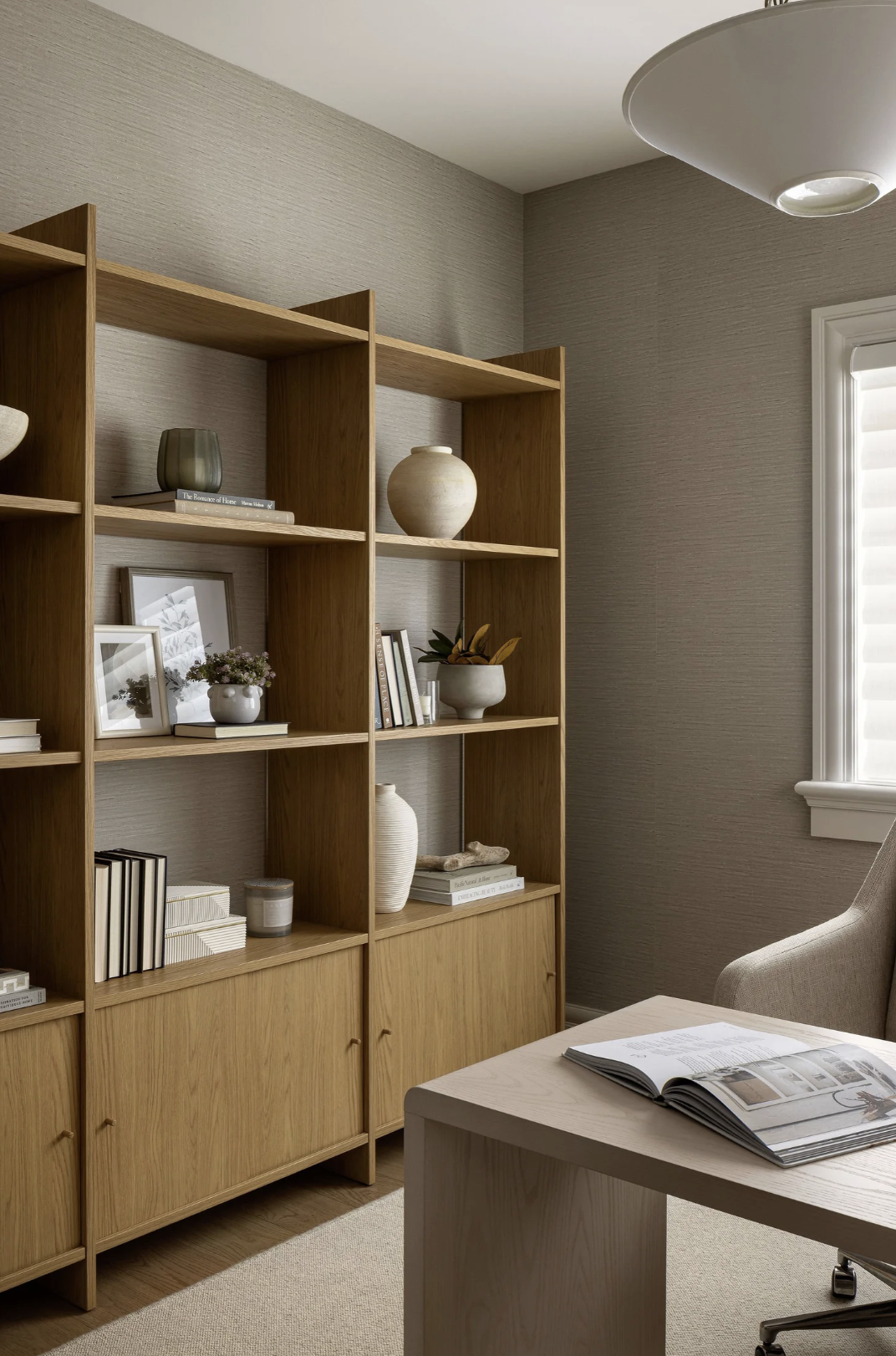
Storage is the challenge I hear about most, and our answer is almost always a wall of built-ins with a mix of open and closed storage. Closed cabinetry swallows everything you don't want to look at. The printer sits on a roll-out tray. Technical equipment hides behind a tall door. Open shelving is saved for the things you actually enjoy seeing, like art, books, or pieces from your travels.
The payoff? A room that works like an office but looks like a beautifully finished space. Your guests admire the shelves. Only you know where the printer lives.
Will you still love it in ten years?
Here's a question worth sitting with before you fall for that bold trend you saw online. What in this room is hard to change, and what can be swapped in a weekend?
Anything permanent should be timeless. Built-in cabinetry and millwork are long-term commitments, so I choose classic profiles and enduring materials, ideally ones that tie the office back to the rest of your home. A room that belongs to the larger story of the house never goes out of style.
Everything else? Have fun with it. Wallpaper, an area rug, even the desk itself can lean bold and current, because when your tastes change, they can change too. That's how you get an office with personality that doesn't feel dated by the next decade.
So, what kind of office do you need?
By now you might have noticed a pattern. Every question I’ve asked is really about you. How you work, what breaks your focus, what you need within arm's reach. The best offices I’ve designed weren't built around a trend or a template. Each one was built around a genuine understanding of the person sitting in it.
Ready to answer these questions out loud? I would love to hear how you work. That conversation is always where the best rooms begin.