

A Designer's Honest Take on Bringing Art Into Your Home
Most of my clients come to me with a clear sense of what they want their home to feel like. The finishes, the furniture, the flow of the space. Art, though, is usually the piece that gets saved for last.
And I understand why. There's so much to decide in a design project that it's easy to treat art like the final cherry on top, something you'll sort out once the "real" decisions have been made. But here's what I've seen happen over 20 years of doing this: people move into a beautiful, thoughtfully designed home and spend the next three years staring at blank walls. Or worse, they impulsively buy something that has nothing to do with the rest of the space. Either way, the home never quite feels finished.
Art deserves a seat at the table, ideally early in the conversation.
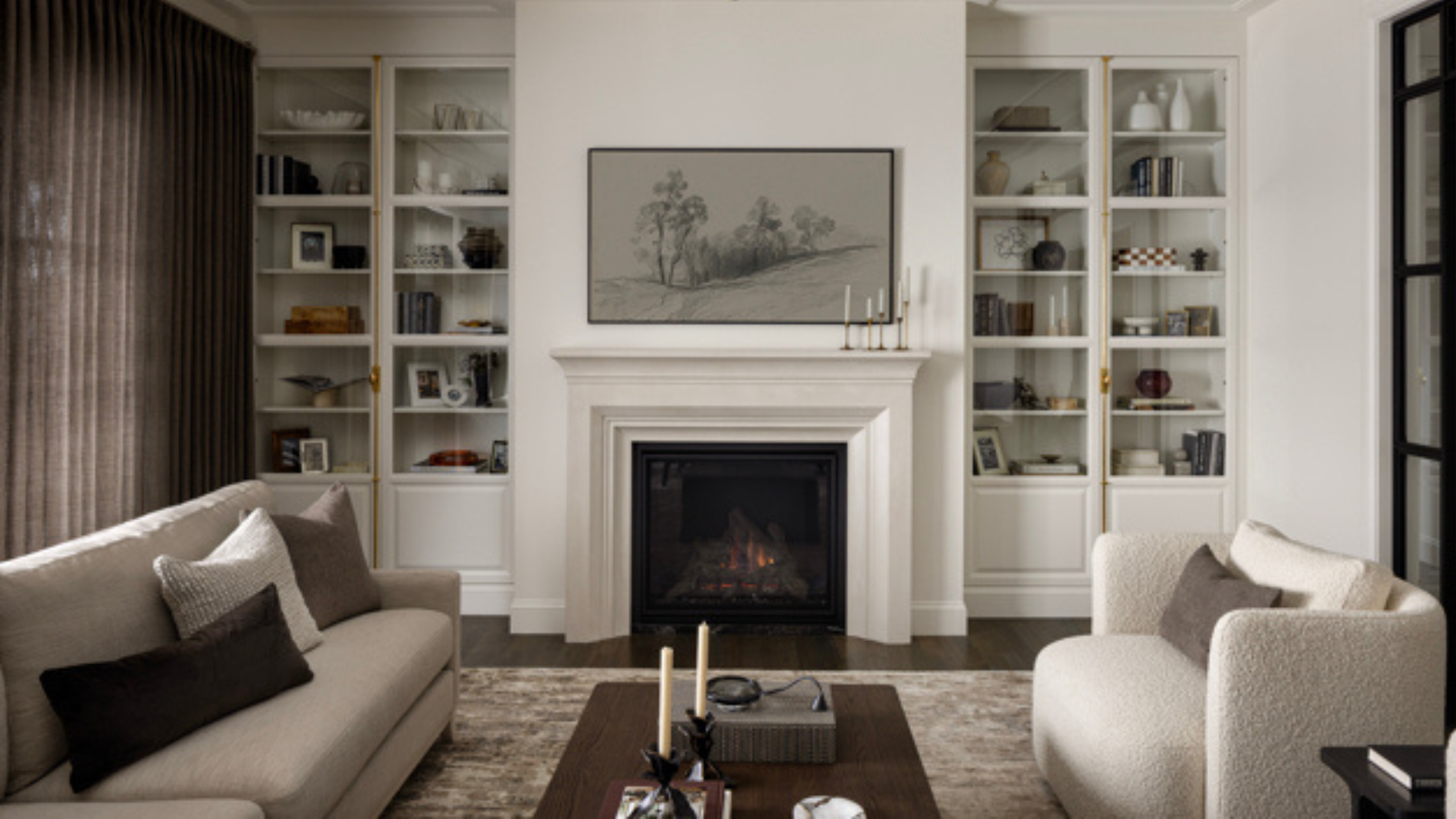
Where does it even start?
When I take on a new project, one of the first things I ask clients to do is send me photos of pieces they already own and love. Not the art they want to buy someday, but the stuff they already have. The painting from their trip to Portugal, the framed print they've moved from house to house for 15 years because they can't bear to let it go. The photograph their daughter took that they keep meaning to properly frame.
You'd be surprised how rarely people send anything back. It's as though the question catches them off guard. They've never really thought of what they own as something worth designing around.
But those pieces often tell me more about someone's taste than any mood board ever could. And if there's something truly meaningful, something with a story, I'd much rather build a room around it than treat it as an awkward afterthought to squeeze in later.
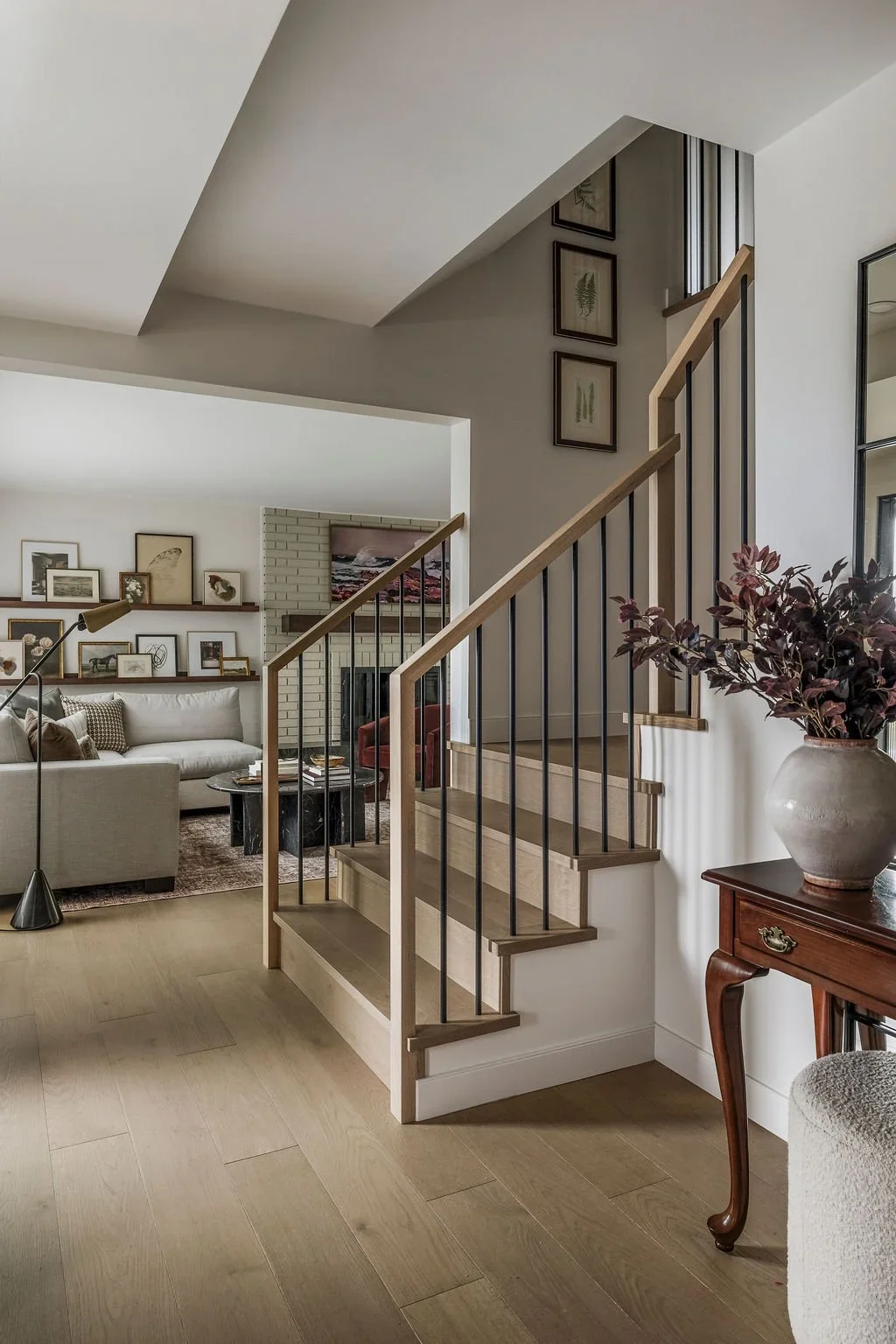
Think traffic, not just taste
Not all walls are created equal, and not every wall needs art. What I look for first is where you actually spend time and where you're moving through your home every single day.
The foyer is one of my favourite spots for an investment piece. You walk past it every time you leave the house and every time you come home. Your guests see it the moment they walk in. It's the introduction to your home, and a strong art piece there can set the entire tone. If you're going to spend money, spend it somewhere that works hard for you.
More personal pieces, things that are deeply sentimental or that you don't necessarily need to share with every dinner party guest, those belong upstairs. The bedroom, the reading nook, the home office. Less foot traffic, but more meaning per square foot.
Scale Is everything
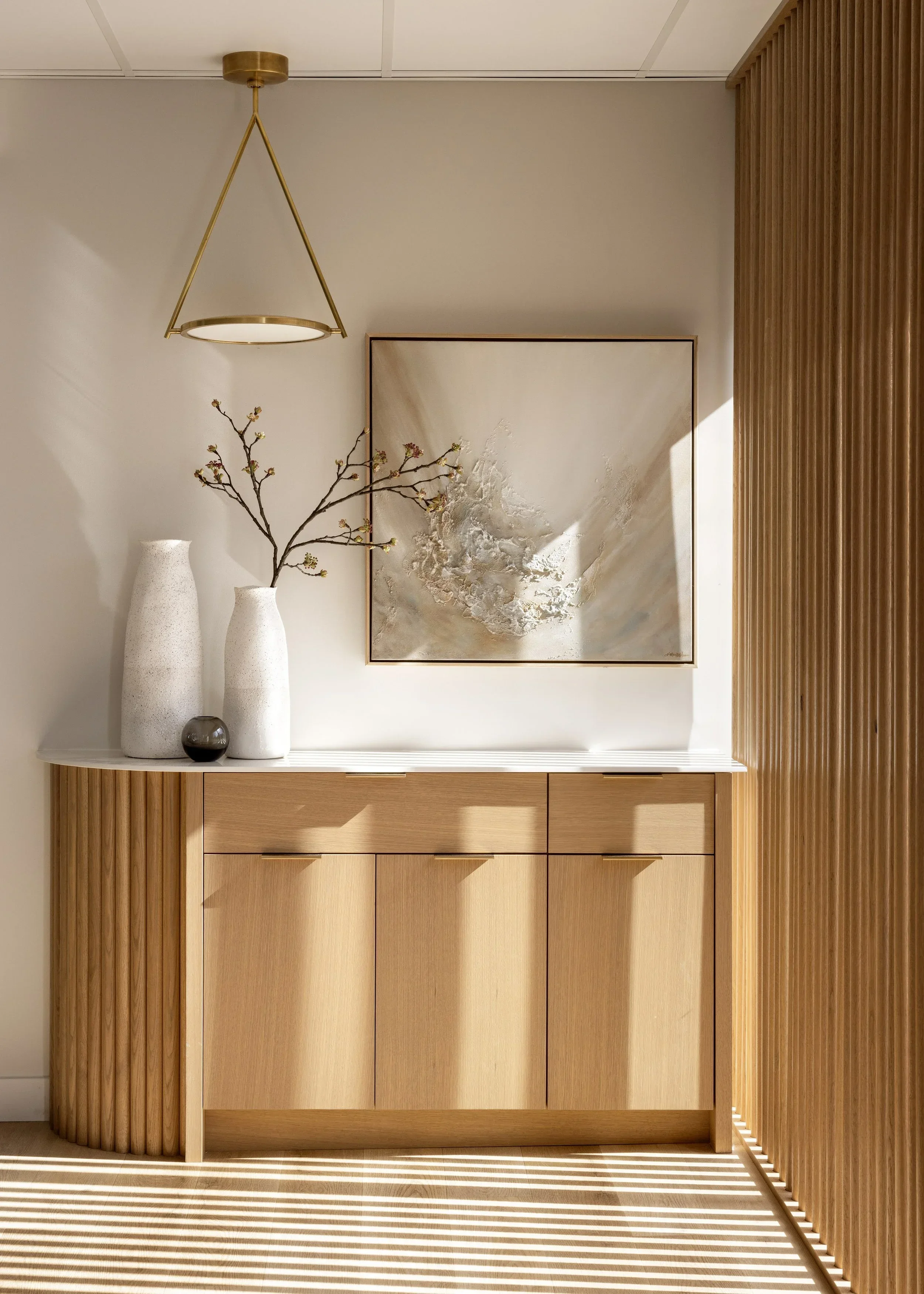
If I had to name the single most common mistake people make with art, this would be it: hanging pieces that are too small for the wall. A modest print floating in the centre of a large expanse of wall has a hard time holding its own.
A general rule I work with: art should cover at least 1/3 of the width of the wall but never more than 3/4 of the wall space it's on. There is of course always an exception to this rule. Get the proportions right, and the piece looks intentional. Get them wrong, and even a beautiful painting can feel off.
Open floor plans, which are everywhere in Calgary's newer builds, don't leave a lot of obvious wall real estate. Figuring out orientation (vertical vs. horizontal), scale, and which surface the piece will actually fit on requires a bit of planning. It's one of those things that seems simple until you're standing in the space with a tape measure.
A few things I wish more people knew
Hang art at eye level — Art hung too high is one of those things that's hard to explain but immediately feels wrong when you're standing in the room. The centre of the piece should sit roughly at eye levl, around 57 to 60 inches from the floor. When art creeps up toward the ceiling, it disconnects from the space and stops feeling like part of the room.
Not every wall needs something on it — This one is hard for people to accept. There's a real urge to fill empty wall space, but blank walls can be a deliberate choice. Letting a few surfaces breathe gives the pieces you do display more weight and presence. Covering every square foot with different art just creates noise.
Wallpaper counts — If you've put a striking wallpaper in a room, you've already made an art decision. In those spaces, I'll often recommend an antique mirror since it adds interest without competing. Stacking a busy print on top of a busy wallpaper can be too much for any wall to carry.
Lighting changes everything — If you know in advance where art is going (and you should), it's worth planning your lighting around it. A picture light mounted directly above a piece, or a recessed spot angled to wash the wall, can transform something from "nice painting" to the focal point of the room. It's one of those details that doesn't cost a fortune but makes a visible difference.
Always use a professional installer — This surprises some people, but it's non-negotiable for me. A proper art installer has the tools, the anchors, and the experience to hang pieces safely and at the right height, especially anything valuable or oversized. It's not a luxury service, It's just the right way to finish the job.
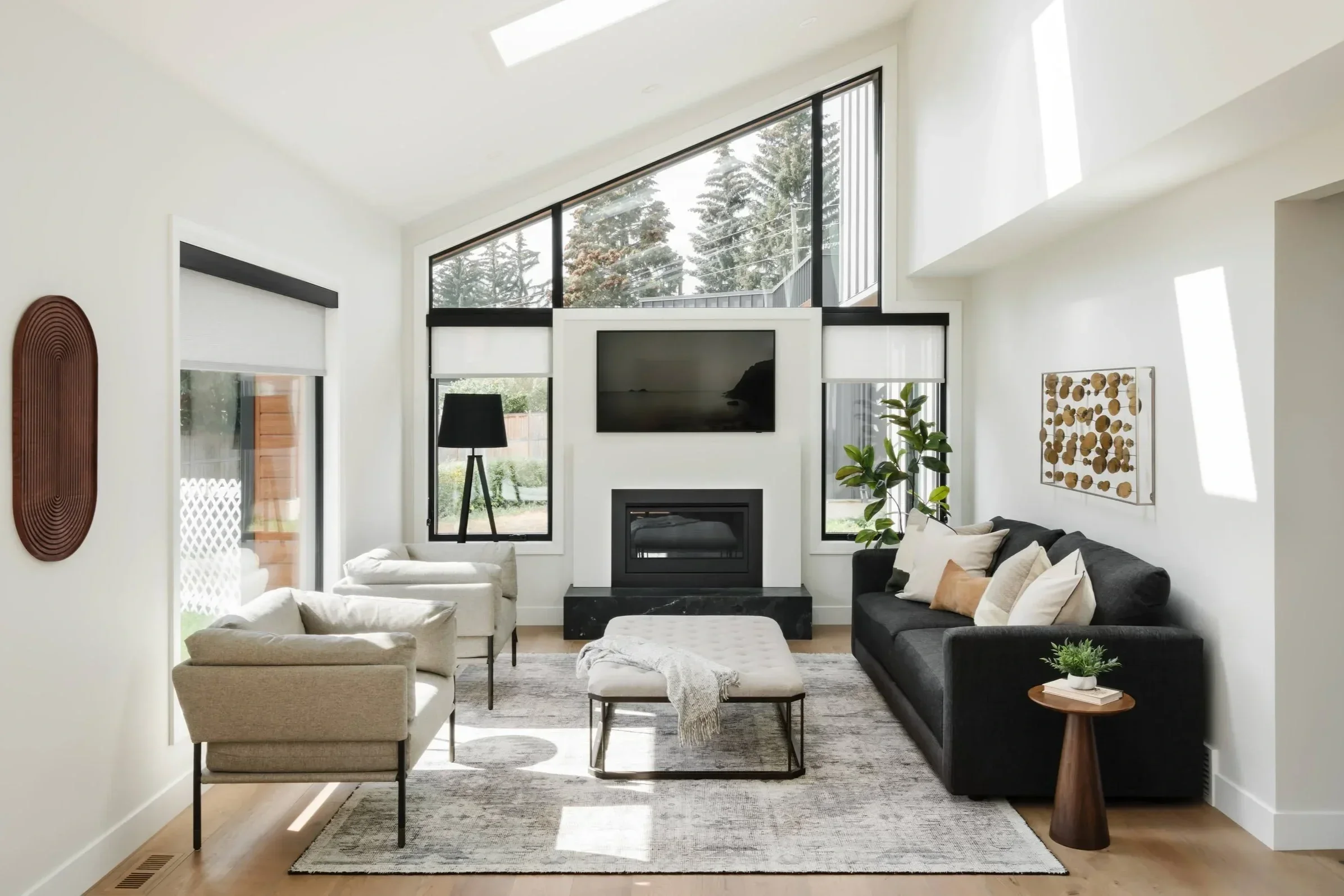
You don't have to spend a fortune
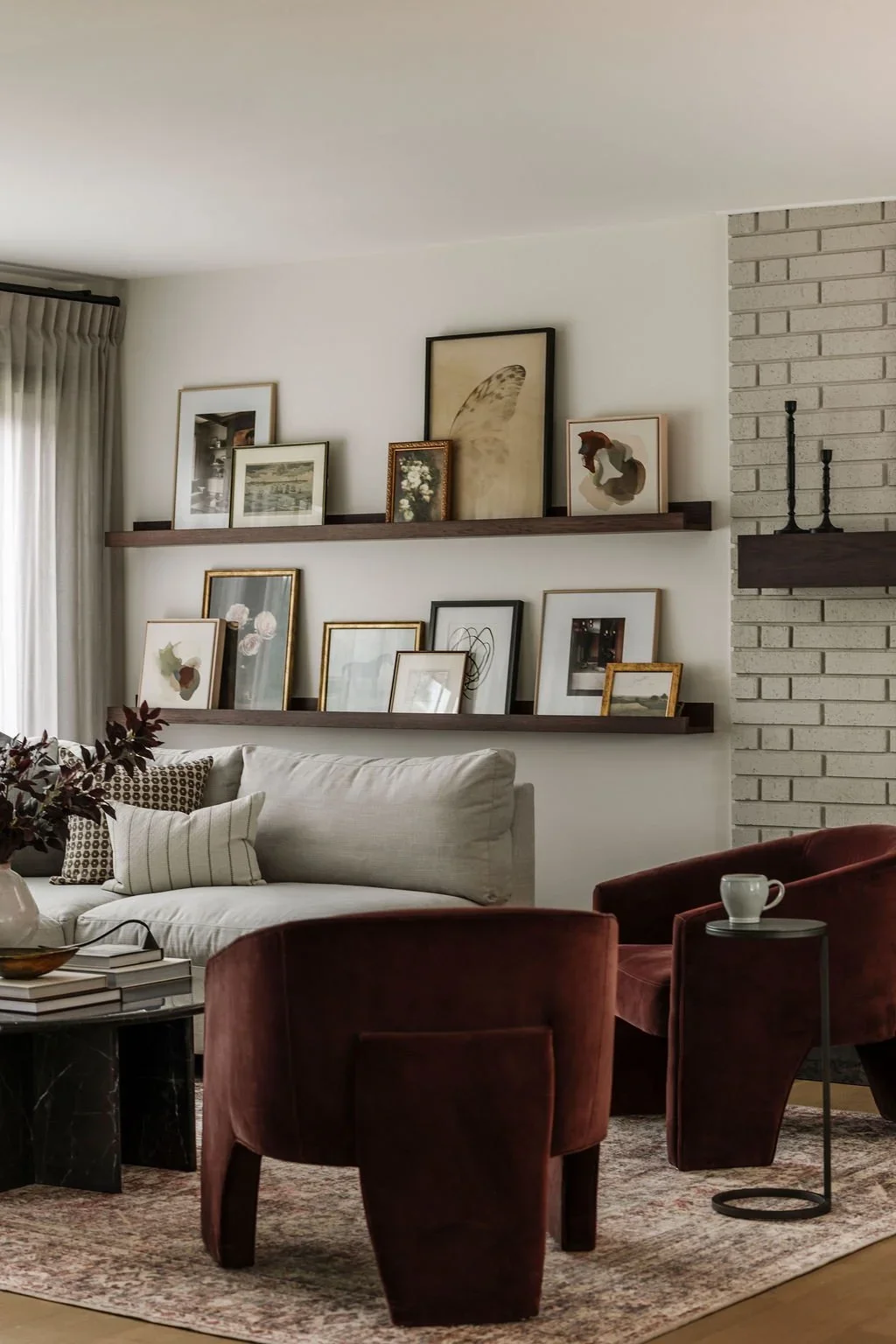
Some of the most beautiful art in homes I've designed isn't from a gallery. Take family photographs. Convert them to black and white, custom frame them with a deep mat behind glass, and they look just as considered and high-end as anything you'd find at an art fair. It's personal, it's unique, and if done properly, can be a stunning gallery wall that no one else on the planet has.
We've also gone to galleries with clients who didn't know where to start. Knowing a bit about who they are and what they're drawn to, we'll walk through together and help them find something that resonates and, more importantly, something that's going to work in the space.
For clients who want something beautiful and easy, I keep a short list of artists whose styles work well across a range of interiors: neutral, layered, original pieces that can hold their own in almost any room. It takes the overwhelm out of the search.
The bottom line
Think about art earlier. Let it be part of the conversation from the beginning, not an errand you'll get to eventually. The pieces you choose, whether it's a single striking canvas in your foyer or a quiet collection of family photographs along the hallway, are some of the most personal elements of your home. They're the things that make a beautifully designed space feel like it actually belongs to you.
And if you're not sure where to start, that's exactly what we're here for.